Inland vs Coastal Coco Coir: What Growers Should Actually Evaluate
Source environment can influence starting salt chemistry but geography alone does not guarantee substrate performance. Here is what matters.

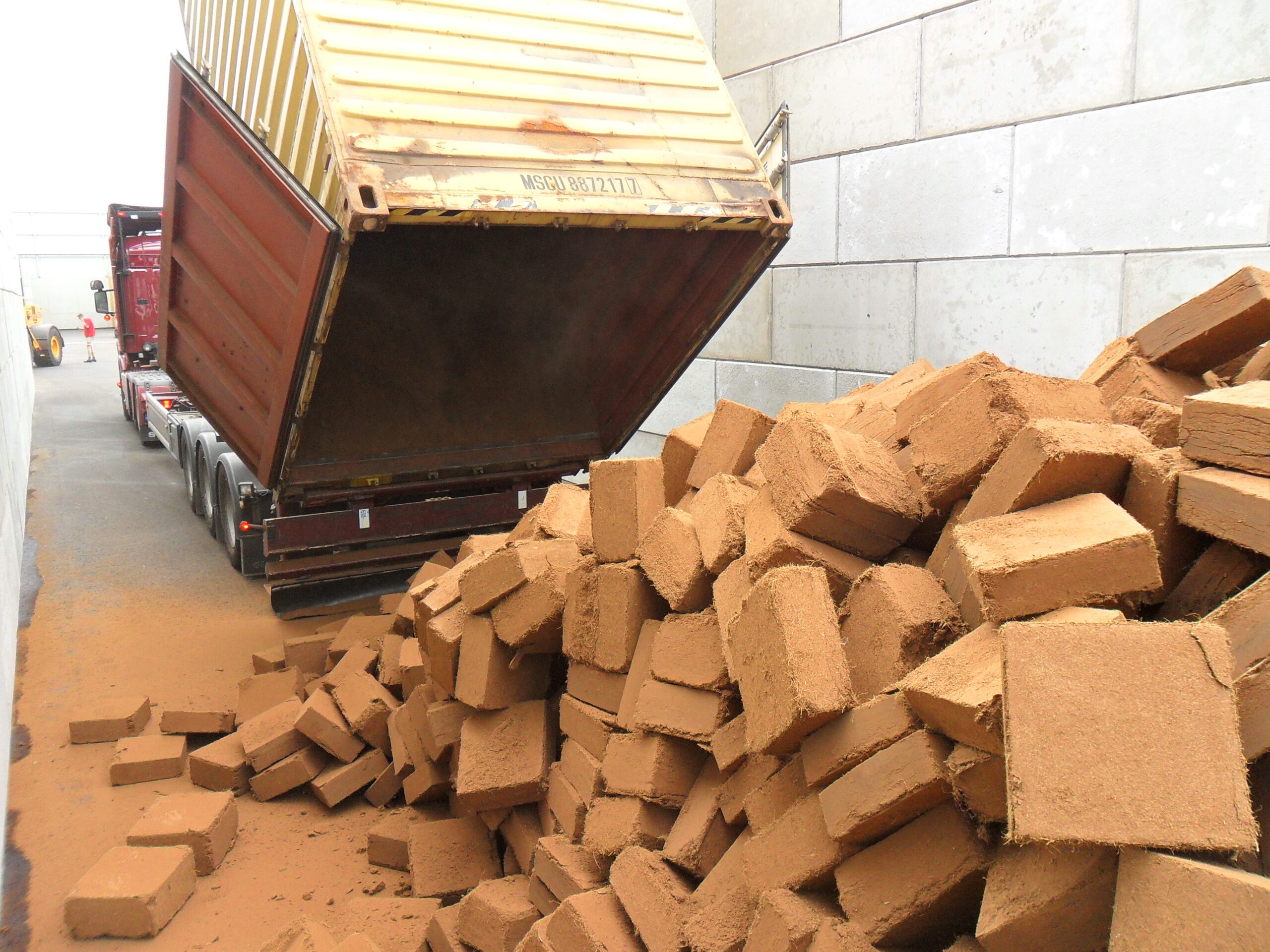
Not all coco coir starts from the same conditions and that matters more than many growers realize. Source environment can influence the starting salt burden of raw material, but geography alone does not determine whether a substrate will perform well.
What matters in production is how the coco is washed, aged, buffered, graded, and controlled before it reaches the grower. Dutch Plantin publicly states that it sources coconuts from trees located far from the sea, in monsoon-fed areas with reduced salt content, which may help lower the initial salt burden of the raw material.
Growers should care because coco directly affects wet-up, dry-back, EC management, nutrient availability, irrigation frequency, and consistency across the crop. Public literature is clear that one of the biggest issues with coir is variability in salts and chemistry — especially sodium, chloride, potassium, and EC.
Why source environment matters
Coconut palms are widely grown in coastal regions and are relatively salt tolerant, but that does not mean salinity is irrelevant. Research on coconut seedlings shows that increasing saline exposure can reduce growth and biomass, and older coconut literature notes that chlorine levels in soils are influenced by rainfall and seawater.
That does not prove every coastal coconut will produce inferior coir, but it does support the basic logic that environmental salt exposure can influence the starting chemistry of the raw husk material. This is where the inland-versus-coastal discussion becomes useful — not because inland is automatically better, but because a lower starting salt burden can reduce the amount of correction needed later.
Dutch Plantin’s technical materials note raw coco pith often starts at an EC of roughly 2 to 6 mS/cm before processing — too high for proper plant production. Potassium, sodium, and chloride all need reduction through washing and careful preparation.
Too high for plant production. Must be reduced.
Sodium, potassium, and chloride are the key targets.
Calcium displaces held ions at cation exchange sites.
Why processing matters more than origin alone
Even if a raw material starts cleaner, it can still be ruined by weak processing. And even if a raw material starts with a heavier salt burden, a supplier with disciplined washing, ageing, buffering, and quality control can still produce a usable horticultural substrate.
Public literature and Dutch Plantin’s own technical documents support the same core point: washing lowers soluble salts and EC, ageing improves stability, and buffering matters because coco’s cation exchange sites naturally hold potassium and sodium unless calcium is used to displace them.
A 2025 Sri Lankan study is especially useful because it cuts through simplistic origin claims. It found that ageing materially reduced EC, sodium, and potassium, and that milling method also affected chemical properties. Final substrate quality is shaped not only by where the coconut grew, but by what happens afterward.
What growers can actually see in a side-by-side comparison
When growers compare two coco substrates side by side, differences in color, texture, particle consistency, and structure can provide early clues about how the material may behave. Color variation can suggest differences in maturity, ageing, processing, or raw-material blending.
Texture differences can affect how evenly the substrate rehydrates, how consistently it drains, and how stable the air-water balance remains. None of that replaces lab data, but visual and physical consistency are still useful signals when evaluating substrate quality.
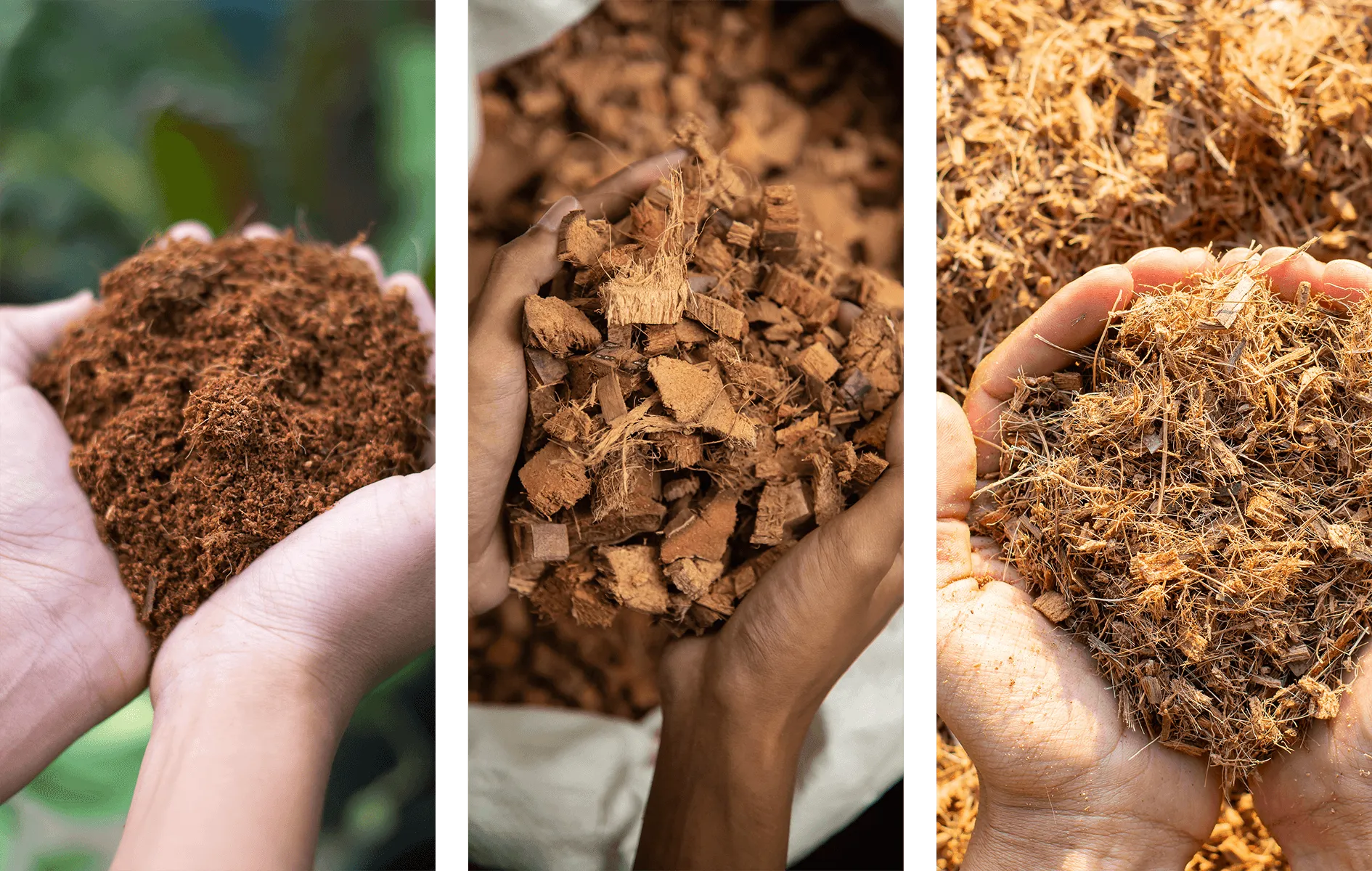
Source: Dutch Plantin Products — image used for article layout.
Why texture and structure matter in the root zone
A substrate’s particle distribution affects water-holding capacity, drainage, oxygen availability, and dry-back behavior. In commercial production, inconsistent structure becomes an operational problem fast: uneven wet-up, uneven dry-back, inconsistent feed response, and more labor spent correcting irrigation.
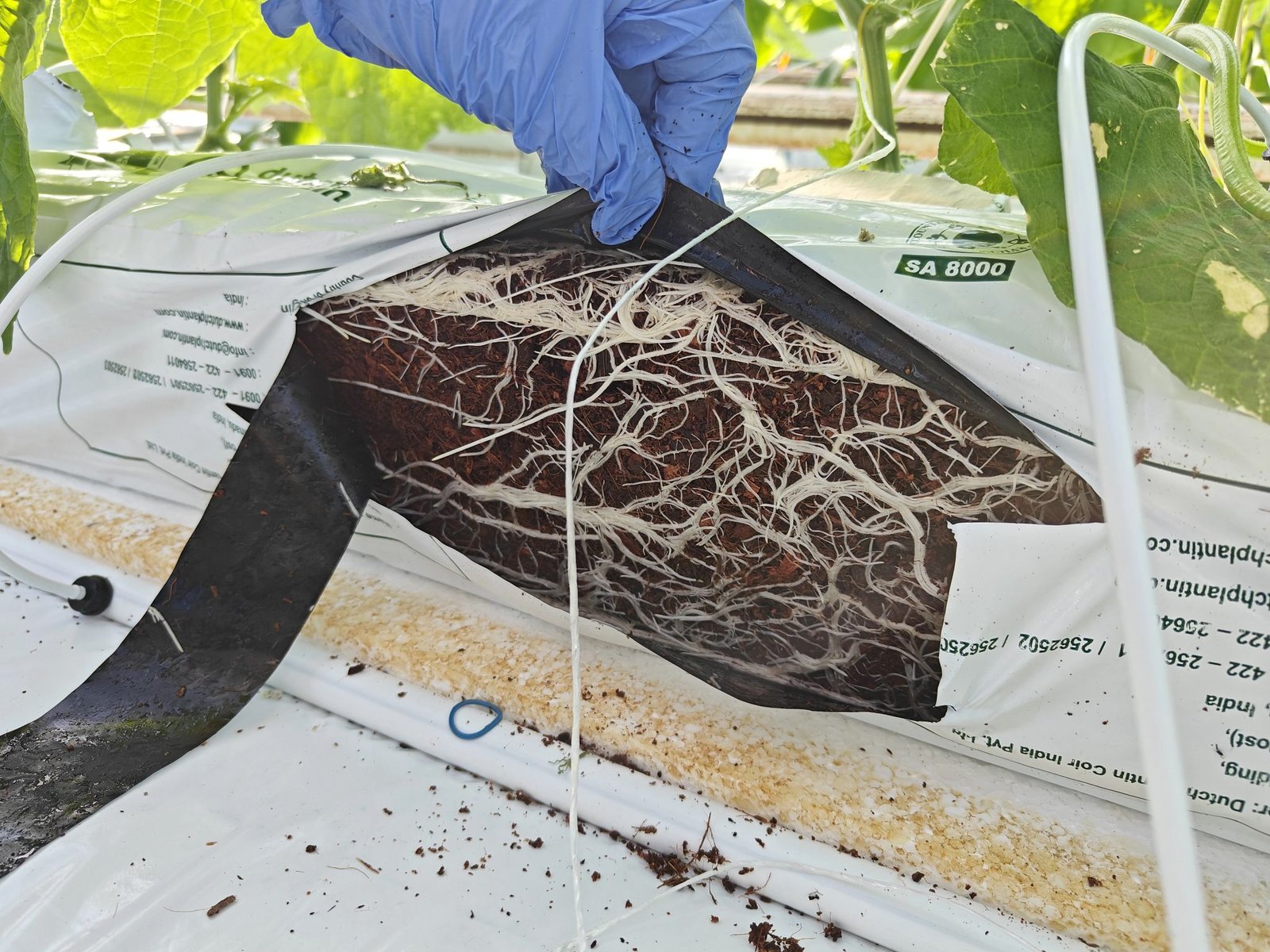
Dutch Plantin’s product literature emphasizes balanced ageing, stable structure, and product consistency for long-term crop performance, while its technical documentation notes that ageing helps reduce instability over time.
The real buyer checklist
If you are comparing inland coco coir and coastal coco coir, do not buy based on slogans. Ask harder questions.
What is the starting EC, and how is it measured?
Is the material washed, aged, and buffered?
What do sodium and potassium levels look like?
How consistent is particle structure batch to batch?
How does the material rehydrate and drain?
What quality-control steps are in place before shipment?
Final takeaway
The smart comparison is not “inland good, coastal bad.” That is simplistic and weak. The better conclusion is this: source environment can influence the starting chemistry of coco raw material — especially around salt burden — but growers should judge substrate by finished performance.
Washing, ageing, buffering, structural consistency, and batch control are what turn raw coir into a serious horticultural substrate. Dutch Plantin’s approach of sourcing from monsoon-fed inland regions, combined with rigorous processing standards, is the full equation.
Ready to evaluate Dutch Plantin for your operation?
Comparing coco substrates for consistency, salt management, and root-zone control? Dutch Direct can help you find the right Dutch Plantin format for your crop, irrigation strategy, and production scale.
About This Article
An editorial comparison of inland vs coastal coco coir with imagery, technical source links, and a grower focused checklist.
Sources & PDFs
- Dutch Plantin FAQ
- From Coconut to Cocopeat — Technical PDF
- Dutch Plantin Blocks Brochure PDF
- Dutch Plantin Growbags Brochure PDF
- Dutch Plantin General Brochure PDF
- Coconut Coir as Sustainable Growing Media — Review
- Cocopeat Nutrient Content & Cation Exchange
- 2025 Sri Lankan Study — Ageing, EC, Na & K
- Coconut Salinity Paper PDF
- Saline Irrigation Study — Coconut Seedling Growth